
DIY Seed Starter Drawers: Can a Plastic Drawer Unit Become a Mini Greenhouse?
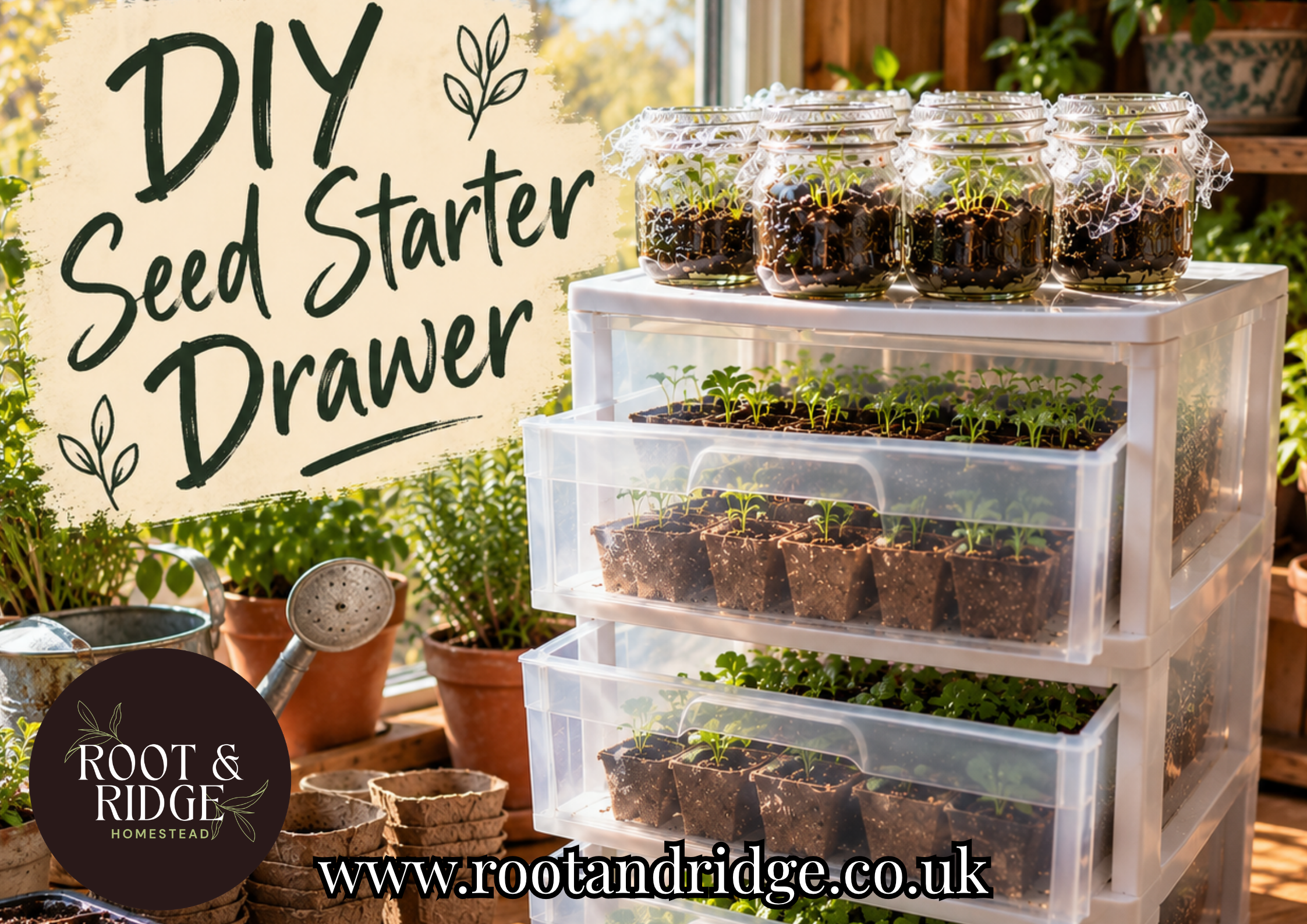
If you’re short on growing space, a small plastic drawer unit can make a surprisingly useful miniature seed-starting station. It takes up very little room on a windowsill or table, keeps pots and trays together and could be particularly handy for anyone growing food in a flat or a house without a greenhouse.
The idea is simple. Seeds often benefit from a warm, consistently moist environment while they’re germinating. A plastic drawer can help reduce draughts and slow down moisture loss, much like a propagator lid. Instead of spreading little pots across every available surface, you can arrange several batches inside a compact set of drawers.
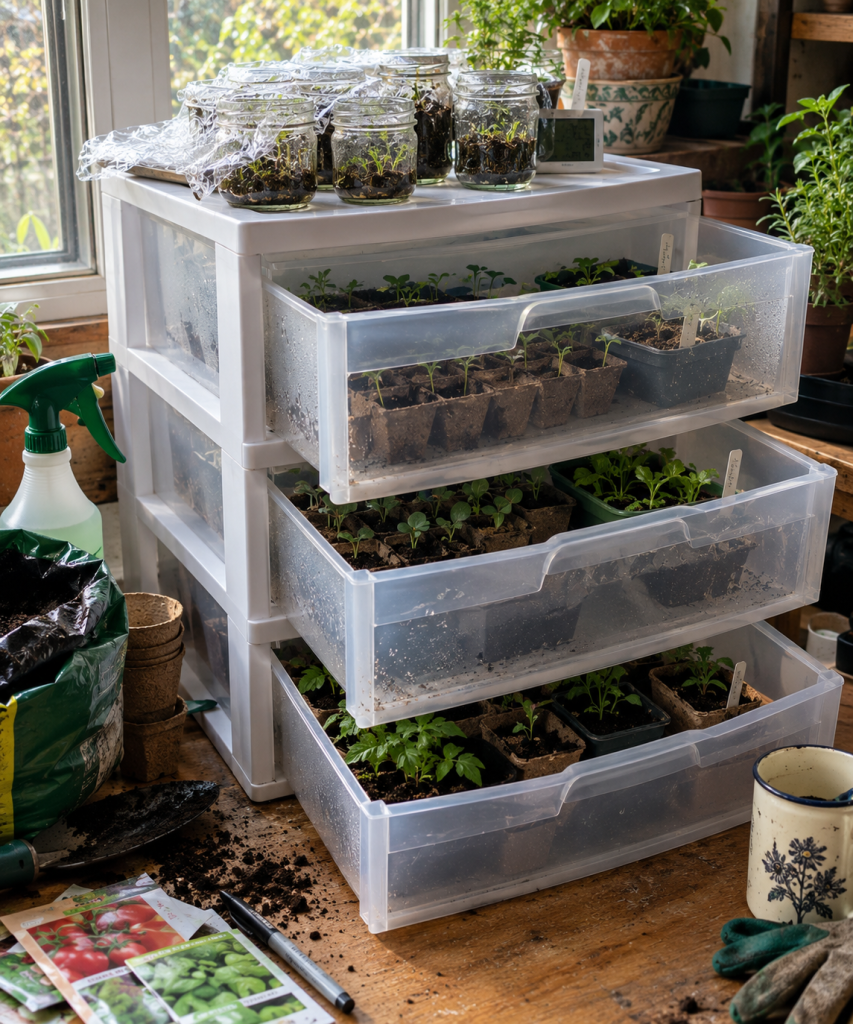
You’ll need a small plastic drawer unit, seed trays or pots, seed compost and a shallow waterproof tray or liner for each drawer. A thermometer is worth having too, because a sunny windowsill can become surprisingly hot even when the room feels cool. Check that the drawers are deep enough for your pots and that you can pull them out without catching the seedlings on the frame. Don’t assume the storage drawers themselves are watertight.
Fill your pots with suitable seed compost, sow according to the seed packet and water gently so the compost is moist rather than saturated. Arrange the pots inside the drawers, ideally with enough room to lift them out for checking and watering.
One important detail is ventilation. I wouldn’t keep the drawers completely closed, particularly once seedlings appear. A closed drawer can trap humidity, which may be helpful during germination, but stagnant, damp air encourages mould and can contribute to damping-off, the disease that causes young seedlings to collapse. Start with the drawers slightly ajar and check them daily. If condensation builds up heavily, open them further. Once the seeds have germinated, pull the drawers open during the day when practical, or move the seedlings out if they aren’t getting enough light.
Light is probably the biggest limitation of this setup. Cloudy or frosted plastic may let some daylight through, but it also reduces the amount reaching the plants. Once seedlings emerge, they need strong light or they’ll stretch towards it and become thin and weak. A clear-fronted drawer unit would be preferable, although even clear plastic won’t make up for a poorly lit position. British winter and early-spring daylight can be limited, so a suitable LED grow light positioned safely above exposed seedlings may be useful. Don’t put an unsuitable electrical light inside a damp, enclosed drawer.
Temperature matters as well. Tomatoes and peppers generally appreciate more warmth for germination than peas or many brassicas, so check the seed packet rather than assuming every variety needs the same conditions. A sunny window can overheat a closed plastic drawer quickly, while a cold windowsill overnight can slow germination. Keep the unit away from direct contact with radiators and monitor the temperature.
For a first attempt, I’d try small batches of lettuce, basil, tomatoes or brassicas, choosing seeds that suit the season and the temperatures available. This is best treated as a temporary home for germination and very young seedlings, rather than somewhere to grow plants indefinitely. As they get taller, need more light or become ready for potting on, they’ll need to come out.
You could also use individual covered containers for germinating seeds, but I’d favour reusable pots with drainage holes over ordinary glass jars. Covers should be vented as needed and removed after germination, and any excess water needs somewhere to drain.
For an urban homestead, this is an inexpensive project worth experimenting with, especially if you’ve already got an unused drawer unit. My preferred setup would have waterproof trays, drawers left slightly open, a thermometer and plenty of light for seedlings as soon as they emerge. It won’t replace a greenhouse, but it could make seed starting much easier to organise when space is limited.
A little disclosure: There maybe affiliate links on this page. That just means if you click on a link, find something you like and buy it, we’ll make a teeny bit of cash which helps to keep this blog running! Don’t worry, you won’t pay any extra AND sometimes you might even get a tasty discount. It’s a win for us and a win for you too!