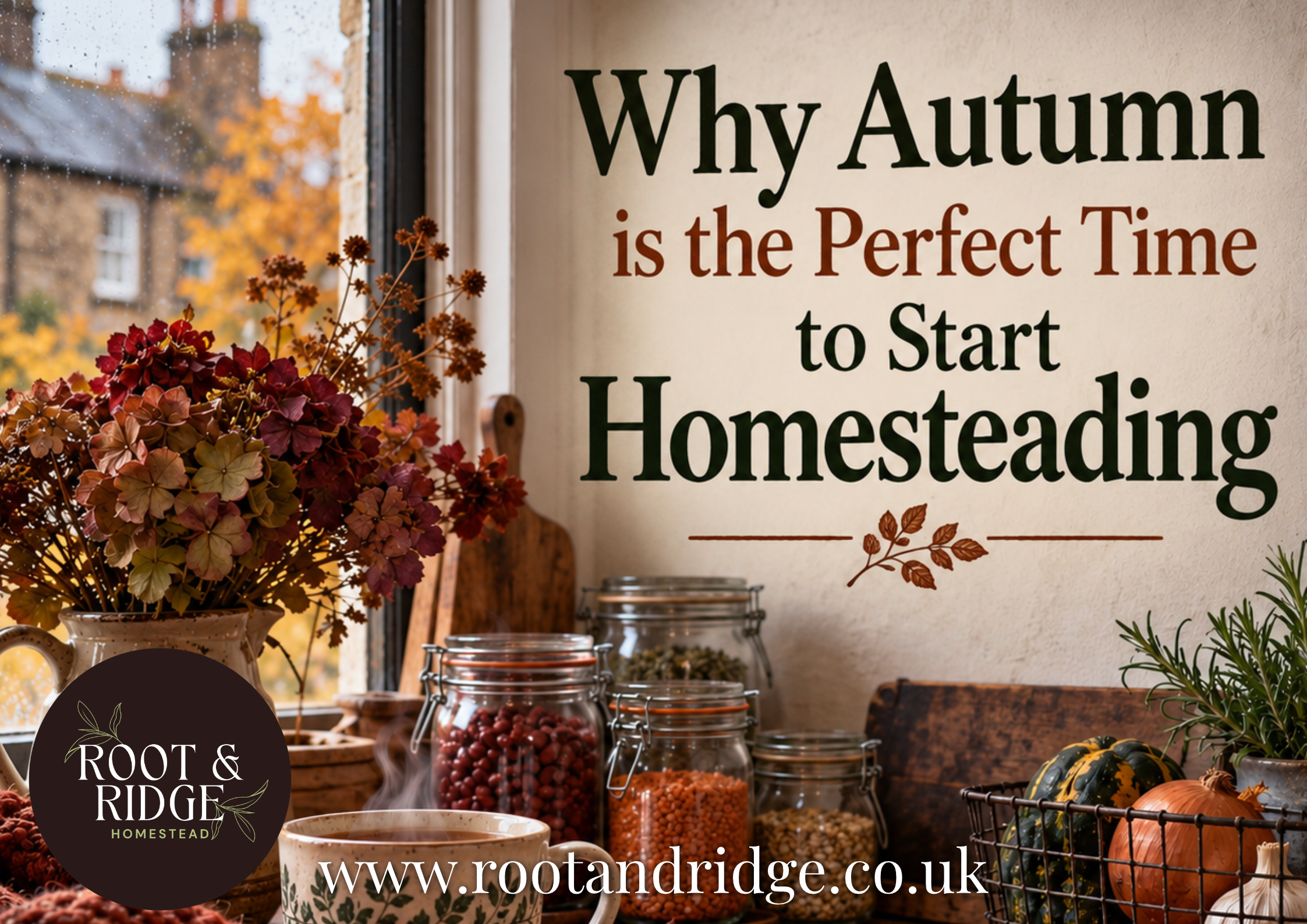
Why Autumn Is the Perfect Time to Start Homesteading
I’ve noticed something that every year, the same thing happens. Every spring, the internet suddenly decides it’s time for everybody to become self-sufficient. There are photographs of vegetable beds, seedlings lined up on windowsills, chickens wandering around gardens and people enthusiastically announcing that this is the year they’re going to grow all their own food. And I love seeing people have a go. making something of their homes and gardens, I really do. But somewhere along the way we’ve managed to make it look as though homesteading has a starting date, and if you’ve missed the spring rush you might as well wait until next year. Well, I disagree. In fact, I think autumn is one of the best times to begin.
For a start, homesteading isn’t just gardening. I know, I know, somebody will be along in a minute to tell me about their enormous vegetable plot and their 17 chickens, how they are fermenting everything possible and squishing almonds in a food processor to make milk, and yes that’s all fabulous and lovely. But you don’t need any of those things. You can live in a flat, a terraced house, have no garden whatsoever, and still learn to produce more of what you use, waste less, prepare for interruptions and become a little less dependent on buying everything ready-made. That’s what we’re interested in at Root & Ridge and always have on our homestead. Not how much land you’ve got, but what you can do with what you’ve got. And autumn gives us plenty to get on with.
As the evenings get colder, I find myself thinking about bread, soup, stews and all the things that make the kitchen the busiest room in the house. If you’re new to making food from scratch, this is a brilliant time to learn. Pick something you buy regularly and have a go at making it. Bread is an obvious one, but it could be flatbreads, stock, biscuits, a simple soup or a batch of pasta sauce to portion up for the freezer.
You don’t need to make everything yourself. You don’t even need to enjoy making everything yourself. There’s no prize for spending 4 hours making something you could buy for 80p if you’d rather be doing something else. The point is to learn what you can make, discover what works for your household and build up a few useful skills. Sometimes homemade saves money, sometimes it tastes better, and sometimes it’s simply reassuring to know you can do it. This something that really winds me up on many homesteading websites is that they bang on and on about the way they think everything should be done, but forget that this is the real world and sometimes we just need to do quick, simple and dare I say it… cheap… things. Sometimes we just need to make do with what we have and do you know what? That is absolutely fine!
Autumn is also a good time to take stock of what you already have. Not in the dramatic, buy-400-tins-and-build-a-bunker sense. I mean open the cupboards, see what’s hiding at the back, check dates, use up the things you’ve forgotten about and think about the foods your household eats regularly.
A working pantry doesn’t need to be enormous. It needs to be useful. If you eat rice every week, keeping a spare bag makes sense. If nobody in the house likes chickpeas, buying 20 tins because somebody on the internet said they’re a homesteading essential makes absolutely no sense at all. Build around your own meals, your storage space and your budget. Even adding 1 extra item to your normal shop when you can afford it is a start.
And while you’re there, have a think about how you’d manage if the power went off for a while. Have you got a torch you can find without emptying the entire kitchen drawer? Can you open a tin without electricity? Have you got drinking water set aside? It’s not about expecting a global disaster. It’s about making everyday life a bit easier when something doesn’t go to plan.
You don’t need a bumper harvest to learn food preservation. You can practise with supermarket reductions, seasonal produce from a local farm shop or simply the extra vegetables you bought and haven’t used. Freezing, drying, making jams and pickles are all useful skills, although different foods need different methods and not everything can safely be stored at room temperature.
I’d start small. Learn how to blanch and freeze a vegetable you use often. Make a batch of freezer-friendly soup. Try a refrigerator pickle. Find out which foods keep well in a cool, dry cupboard and which need the fridge. Once you’ve got the basics, you can decide what you’d like to learn next. There’s no need to fill 30 jars on your first afternoon, especially when you’ve still got to wash all those jars afterwards.
Even without a garden, autumn is a lovely time to pay attention to what’s growing around you. Walk, or in my case, wheel, through a local park, look at the trees changing, notice which berries are still around and start learning to identify the plants you see regularly. You don’t have to pick anything. In fact, learning to identify things confidently before you even think about harvesting them is time very well spent.
If you do forage, make sure you’ve identified what you’ve found beyond doubt, know whether picking is permitted where you are, and only take what you can use without damaging the plant or depriving wildlife. You can enjoy the season just as much with a notebook and the camera on your phone as you can with a basket. And then, once you do know what you are foraging, have a wild food lunch every now and again. Make it fun!
Autumn is also a good time to think ahead to growing. Perhaps you’ve got a sunny windowsill, room for a few pots or an allotment you’d like to apply for. You can research what grows in your space, learn about compost and soil, save a few suitable seeds and make a realistic plan for spring. There’s no need to rush out and buy half a garden centre just because you’ve decided to have a go.
Some of the most useful homesteading skills have nothing to do with growing food. Mending a torn seam, sewing on buttons, learning to maintain your tools, making simple household cleaners, keeping records of what you spend or working out how to use leftovers are all part of becoming more resourceful.
Choose 1 skill and practise it. Then choose another. If the first attempt is dreadful, welcome to learning something new. I’ve never understood why people expect themselves to be brilliant at something they’ve only just started. We don’t expect somebody to play the piano beautifully after 20 minutes, so why do we expect a perfect first loaf of bread?
And there’s something else I like about beginning in autumn. It takes away that frantic feeling that you’ve got to plant everything immediately or miss your chance. You’ve got time to read, experiment, get things wrong, change your mind and work out what sort of homesteading suits your life. By the time spring comes around, you won’t be starting from nothing. You’ll already have skills you can use.
I think this is the bit people sometimes forget. Homesteading doesn’t begin when you buy a smallholding. It doesn’t begin when you get chickens, install a greenhouse or harvest your first basket of tomatoes. It begins when you decide you’d like to do a little more for yourself and your household, and then have a go. Even if that very first thing is “today I want to read more about homesteading”.
Maybe this autumn you’ll bake your first loaf. Maybe you’ll sort out the cupboard that’s been threatening to bury you every time you open it. Maybe you’ll learn to freeze vegetables without ending up with a solid lump of ice, or finally sew that button back on the coat you’ve been avoiding for 6 months. None of those things will look particularly impressive on social media, but they’ll be useful in your everyday life, and that’s rather the point. Homesteading should have never become a social media trend, It should be just ‘what we do’.
So if you’ve been thinking about homesteading but assumed you’d missed your chance for this year, you haven’t. Put the kettle on, pick something you’d like to learn and start now. Spring will still be there when you’re ready for it.
And if you’d like to spend a little time learning alongside other people who are interested in homesteading and becoming more self-sufficient, we’ve got something coming up that you might enjoy! On 28th and 29th November, we’re holding our Root & Ridge Homesteading & Prepping Retreat Weekend. We’ll be spending 2 days exploring practical skills, sharing knowledge, asking questions and talking about ways to become more self-sufficient, whether you’re just getting started or you’ve been doing this for years. You don’t need a smallholding, a garden or any particular level of experience to join us. Just bring your curiosity and a willingness to have a go. £200 for the entire weekend including drinks, lunch and afternoon tea each day. We’d love to see you there! You can find out more and book your place here: https://www.tickettailor.com/events/mamasmagicandmojo/2443986
Missed my interview with the Daily Mail? You can find it here too! https://www.dailymail.com/lifestyle/article-16243015/Forget-baked-beans-Professional-middle-class-preppers-reveal-smart-alternatives-you-REALLY-stock-disaster-strikes.html?ico=authors_pagination_mobile
A little disclosure: There maybe affiliate links on this page. That just means if you click on a link, find something you like and buy it, we’ll make a teeny bit of cash which helps to keep this blog running! Don’t worry, you won’t pay any extra AND sometimes you might even get a tasty discount. It’s a win for us and a win for you too!